Peptide Quality Control & Pureness Testing Boc Scientific Researches
Understanding Peptide Pureness: What 99%+ Really Means
BOC Sciences offers multi-batch contrast analysis to aid customers establish raw material top quality criteria and ensure consistency. Recurring non-peptide components can change assay interpretation, distort peptide content calculations, and complicate great deal credentials. We sustain targeted analysis of relevant residuals based upon the job and sample history.
One of the most rigid grade, involving mindful HPLC filtration-- in some cases numerous rounds-- and strenuous QC. Required for quantitative studies, structural biology, in vivo research study models, and any type of application where even percentages of contamination could affect results. This is the quality where the cost increases most dramatically, since achieving that last 1-- 3% of purity requires disposing of a significant portion of the synthesized product. A deletion peptide missing out on a solitary deposit may still bind to the exact same receptor, but with various affinity or selectivity. In concentration-response experiments, these contaminants can move contours, squash plateaus, or introduce biphasic actions that covers the true activity of the target compound. The isoelectric factor (specialty) is a crucial parameter for recognizing peptide solubility and habits in different atmospheres.
Pollutant Troubleshooting
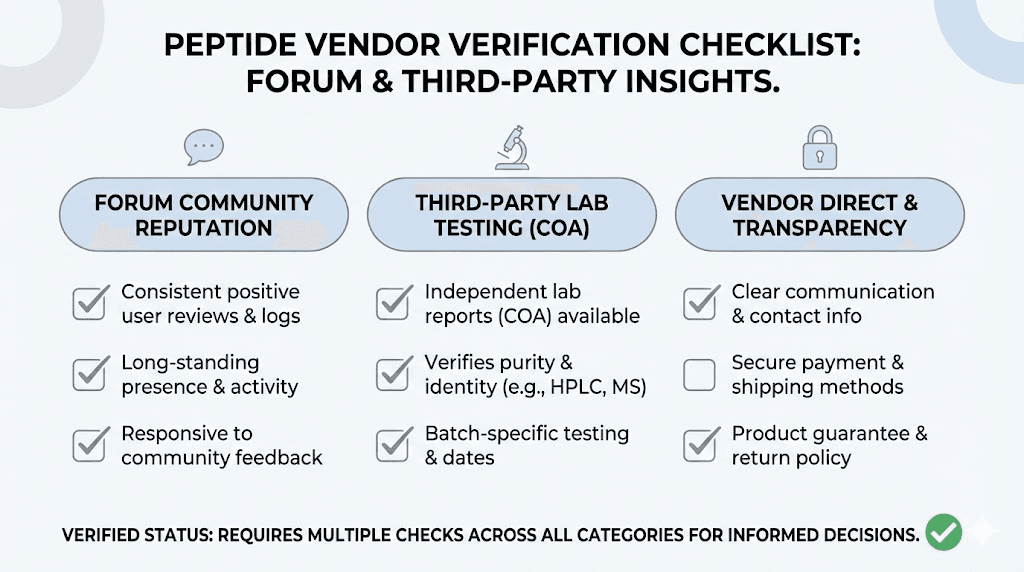
The purity of peptides is generally checked making use of high-performance fluid chromatography (HPLC). HPLC divides peptides based upon their interactions with a fixed phase, enabling impurities and spin-offs to be determined and evaluated. In addition, mass spectrometry (MS) can be used to verify the peptide's molecular weight and series, giving further confirmation of pureness by identifying pollutants and deterioration items. If you've ever before obtained an artificial peptide for a lab experiment, you've most likely noticed a pureness percentage on the certificate of analysis-- generally worths like 95%, 98%, or even 99%. Peptide pureness is an essential high quality metric that informs you what fraction of a peptide sample is the desired item versus unwanted spin-offs.
Peptide pureness refers to the amount of the appropriate peptide in the peptide item. Nonetheless, for complete top quality evaluation or the characterization of peptides for a variety of applications, extra logical tests are suggested. For instance, in order to guarantee success in numerous peptide experiments, it might be necessary to get rid of trifluoroacetic acid (TFA), or to review the solubility of hydrophobic peptides before carrying out the needed experiments. Throughout the detection, we utilize RP-HPLC integrated with MS to establish the molecular weight of the peptide. The absolute amount of the right peptide in a sample is the item of the peptide material and the peptide purity. BOC Sciences has a top-tier peptide quality screening platform, incorporating innovative analytical innovations and premium instrumentation to supply specific and reliable peptide quality analysis services.Medical Visual Appeals Product Growth
Nonetheless, attaining ultra-high purity (claim 99%) can be technically difficult and may not constantly be required, as we'll review later. The trick is recognizing what level of purity suffices for your requirements and how purity is figured out in the first place. For a lot of research study functions, high purity means you can be confident that the large majority of the molecules in your vial are the right peptide, which aids guarantee experimental consistency and reproducibility. Our operations is made to relocate from sample context testimonial to interpretable peptide data with marginal analytical obscurity. Jobs can range from one sample identification check to multi-lot comparability, residual evaluation, solubility evaluation, or stability-focused analytical packages. Hydrophobic peptides, extremely standard sequences, customized constructs, and closely relevant analogs can be reviewed with technique modifications matched to their logical threats.FDA and the European EMA have actually established guidelines mandating detailed evaluation and quality control for peptide products to ensure safety and security and effectivenessr. In the context of pharmaceutical or clinical-grade peptides, research laboratory validation is essential to satisfying these standards. For instance, prior to a peptide drug can go into human tests, its manufacturer must show the identification, purity, effectiveness, and safety and security of the peptide via confirmed logical techniques. Peptide pureness testing information are compulsory in preclinical researches and must be consisted View website of in investigational brand-new medicine (IND) applications and later new drug applications (NDAs).
- It ensures you that the peptide will certainly perform well in experiments (presuming purity and identity are as mentioned), yet it likewise brings the caution "Study Use Only." This expression is usually printed on the vial or documentation.
- It's feasible to have a peptide that is, claim, 95% pure by HPLC and yet the net peptide content is something like 70% of the powder's weight (the rest being water and salts).
- This method divides peptides from impurities and evaluates both target peptides and contaminants, making sure top quality samples for research.
- Hydrophobic peptides, highly fundamental series, changed constructs, and closely relevant analogs can be reviewed with method modifications matched to their logical threats.
The gold criterion for determining peptide purity is high-performance fluid chromatography, universally abbreviated as HPLC. If you see a pureness portion on a peptide product, it almost certainly originated from an HPLC evaluation. This matters because peptides are constructed one amino acid each time via solid-phase peptide synthesis (SPPS). At each step, there's a small possibility that something fails-- an amino acid doesn't attach, the wrong alteration takes place, or a side response generates an unintended by-product. Over a chain of 10, 20, or 40 amino acids, those small per-step mistake prices compound.
Tests can be carried out utilizing high-precision stabilization chambers, replicating different settings, and using worldwide standards to research short-term and lasting stability, important for regular peptide performance. Some peptides stop working not since the sequence is wrong, but due to the fact that their physical habits in genuine solvents is poorly recognized. We supply physical building testing that helps teams function better with challenging samples. Mass spectrometry confirms whether the measured mass matches the anticipated peptide mass. The chromatogram Informative post is the most vital visual data aspect on an HPLC peptide examination record. It is a graph with time on the horizontal axis and detector feedback, normally UV absorbance, on the upright axis. Each peptide has a various expected molecular weight, so mass verification is not a generic badge; it is compound-specific proof. For a deeper identity-focused explanation, see Mass Spectrometry Peptide Confirmation. Identification screening validates that what was synthesized is in fact the intended series.